


Business transformation is rarely about making a few small changes. It can involve redesigning processes, modernising technology, changing how teams work, improving customer experiences and creating new ways of delivering value.
For many organisations, managing this level of change internally can be challenging. This is where a business transformation consulting firm can provide valuable expertise, an external perspective and practical experience.
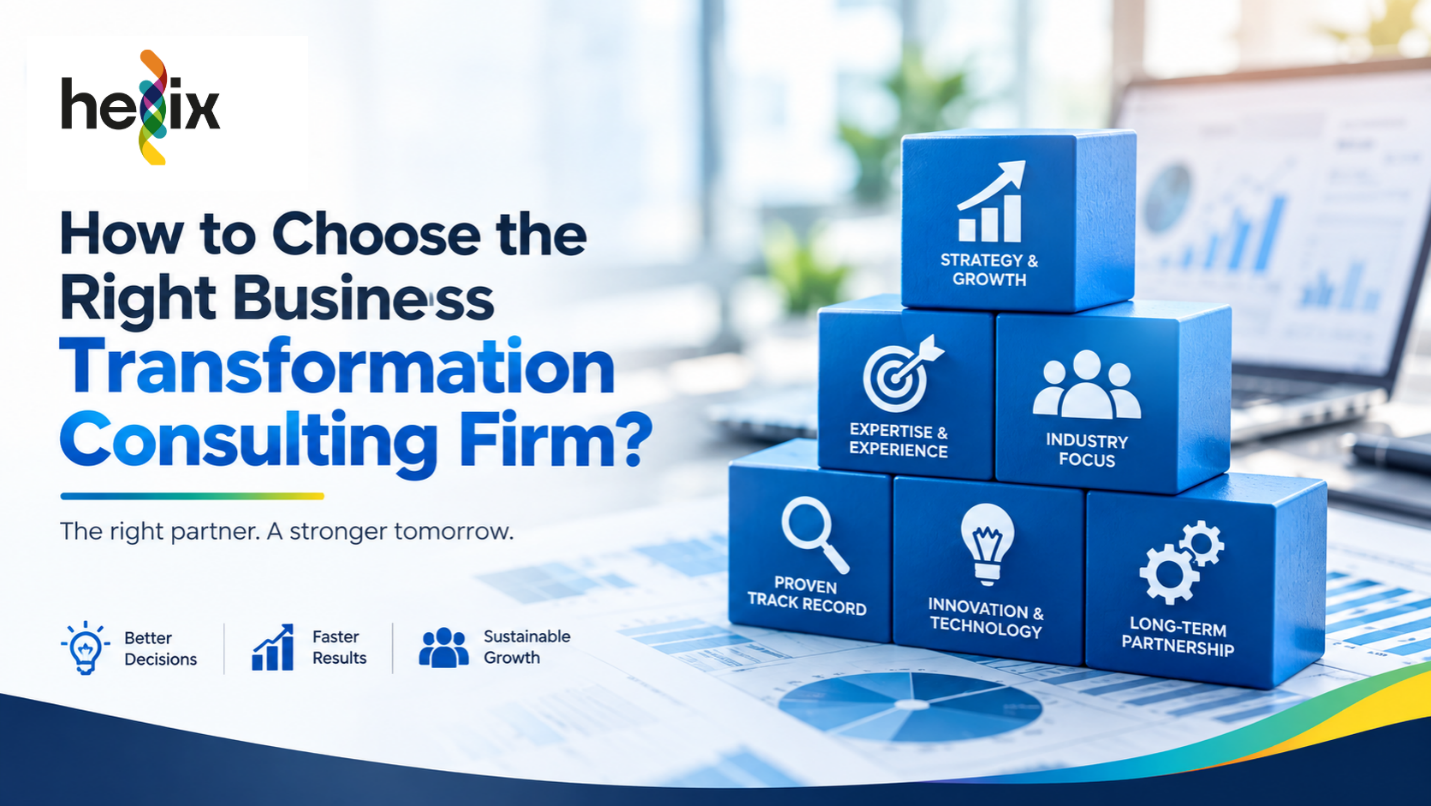
However, choosing the right consulting partner is not simply about finding the biggest firm or the lowest-cost option. The right partner should understand your business, work effectively with your teams and have the strategic and technical expertise needed to turn plans into measurable outcomes.
So, what should you look for when choosing a business transformation consultant?
- Look for Relevant Experience
Experience matters, but it should be relevant to your transformation objectives.
Before selecting a consulting firm, consider the organisations and projects it has worked with. Has the team handled challenges similar to yours? Do its consultants understand your industry, technology environment or operational model?
Look beyond the company name and understand who will actually work on your project. Ask about their previous transformation programmes, technical expertise and experience.
The goal is to find a team that understands not only how to develop a strategy but also how to make that strategy work in practice.
- Choose an Approach That Fits Your Business
Every transformation programme is different.
Some organisations may need help assessing their technology and processes. Others may require support with software modernisation, technology selection, AI adoption or a broader transformation programme.
A good consulting partner should take time to understand your situation before recommending a solution.
Look for a firm that can adapt its approach to your objectives rather than forcing your organisation into a predefined framework.
Your consulting partner should be able to explain:
- What needs to change and why
- Which areas should be prioritised
- What resources will be required
- What risks need to be managed
- How progress will be measured
- How the transformation can be sustained
- Assess Strategic and Technical Expertise
Business transformation is not purely a strategic exercise.
A transformation strategy may look compelling on paper, but implementation can become difficult when existing software, data, integrations and infrastructure are considered.
For this reason, consider whether your consulting partner can connect business strategy with technology.
A transformation programme may require a software stack assessment, architecture review, technology selection or software modernisation. These capabilities can help ensure that strategic recommendations are technically realistic.
This is particularly important for technology-led transformation, where business objectives and technical decisions need to remain closely connected.
- Consider How They Work With Your Team
Transformation works best when consultants collaborate with internal teams.
Your employees understand your organisation, customers and processes. A consulting partner should therefore encourage knowledge sharing and collaboration.
During the selection process, ask:
- How will your team work with our employees?
- Who will be responsible for key decisions?
- How will knowledge be transferred?
- What happens when the engagement ends?
- How will internal teams be supported during implementation?
A strong partner should help your organisation develop greater capability rather than simply delivering reports and presentations.
- Look for Practical Implementation Experience
A transformation strategy is only useful if it can be put into practice.
Ask potential consultants how they move from assessment and strategy into implementation. Find out whether they can help define priorities, establish milestones and support delivery.
For example, replacing legacy systems may require planning around architecture, data migration, integrations, security and business continuity. Similarly, introducing AI may require strategy, architecture, implementation and governance.
A consulting firm that understands both planning and delivery can help bridge the gap between business objectives and practical implementation.
- Prioritise Flexibility
Transformation programmes rarely remain exactly as planned.
New information can change priorities. Business conditions can shift. Technology requirements can evolve.
Your consulting partner should be able to respond to these changes without losing sight of the overall objectives.
Flexibility does not mean having no structure. It means having a clear direction while adapting when circumstances change.
Ask potential consultants how they handle changing requirements, additional priorities and unexpected challenges.
- Evaluate Communication and Transparency
Transformation programmes can involve executives, technology teams, operational staff and external suppliers. Clear communication between these groups is essential.
A good consulting partner should explain complex issues clearly and challenge assumptions when evidence suggests that another approach could produce better results.
Before appointing a firm, consider how clearly its consultants communicate during initial discussions.
Clear expectations around scope, responsibilities, timelines and deliverables can help establish a productive relationship from the beginning.
- Consider Cost Against Value
Cost is important, but the cheapest consultancy is not necessarily the most cost-effective choice.
Instead of comparing day rates alone, consider the overall value of the engagement.
Ask potential consulting firms:
- What is included?
- Which consultants will be involved?
- How will progress be measured?
- What deliverables will you receive?
- What assumptions affect the estimated cost?
- What ongoing support may be required?
A transparent commercial structure makes it easier to evaluate the investment against expected business outcomes.
- Look for AI and Emerging Technology Expertise
For many organisations, transformation in 2026 also means considering artificial intelligence.
AI can help automate processes, support decision-making, analyse data and improve customer experiences. However, introducing AI without understanding data, technology, security and governance requirements can create unnecessary risks.
If AI is part of your transformation plans, consider whether your consulting partner can support AI strategy, architecture, implementation and governance.
At Helix Technology Solutions, AI is part of a broader technology consultancy offering. Helix TS provides services covering AI strategy and roadmaps, AI architecture and solution design, AI delivery and AI governance, alongside wider software and technology consulting.
This broader capability can be valuable when AI transformation needs to work alongside existing software, data and technology environments.
- Think Beyond the Initial Project
Transformation is an ongoing process. Organisations need to continue adapting as customer expectations, technology and market conditions change.
A suitable consulting partner should help your organisation develop the capabilities, processes and technology foundations needed to continue improving after the initial engagement.
The important question is not simply whether a consultancy can deliver a transformation project. Consider whether it can help your organisation build the capability to continue transforming.
Conclusion
Choosing a business transformation consulting firm is an important decision. The right partner should combine relevant experience, strategic thinking, technical expertise and practical delivery capability.
Look beyond reputation and price. Assess the people who will work on your project, their understanding of your organisation, their approach to technology, their ability to collaborate with internal teams and their commitment to measurable outcomes.
For organisations undertaking technology transformation, capabilities such as software assessment, architecture, modernisation, technology selection and AI consultancy can also be important factors when selecting a partner.
At Helix Technology Solutions, the focus is on combining strategic and technical expertise to help organisations address complex technology challenges and turn transformation objectives into practical solutions.
Ultimately, successful transformation is not about implementing change for its own sake. It is about making the right changes, in the right order, to achieve meaningful and sustainable business outcomes.
Frequently Asked Questions
What does a business transformation consulting firm do?
A business transformation consulting firm helps organisations identify opportunities for improvement and develop practical strategies for change. Depending on the organisation’s needs, this can include process improvement, technology transformation, software modernisation, architecture, technology selection, AI adoption and implementation.
How do I choose the right business transformation consultant?
Consider the consultant’s relevant experience, strategic and technical capabilities, approach to collaboration, implementation experience, flexibility, communication and pricing. It is also important to understand which consultants will work on your project and whether their expertise matches your objectives.
How much does business transformation consulting cost?
The cost varies depending on the size and complexity of the transformation, scope of work, expertise required and length of the engagement. Businesses should consider the overall scope, expected outcomes, deliverables and resources required rather than focusing only on day rates.
Why is technology expertise important in business transformation?
Technology is often central to modern transformation programmes. Existing software, data, architecture, integrations and infrastructure can affect what is practical to implement. A consulting partner with strategic and technical expertise can help ensure transformation plans align with the organisation’s technology environment.